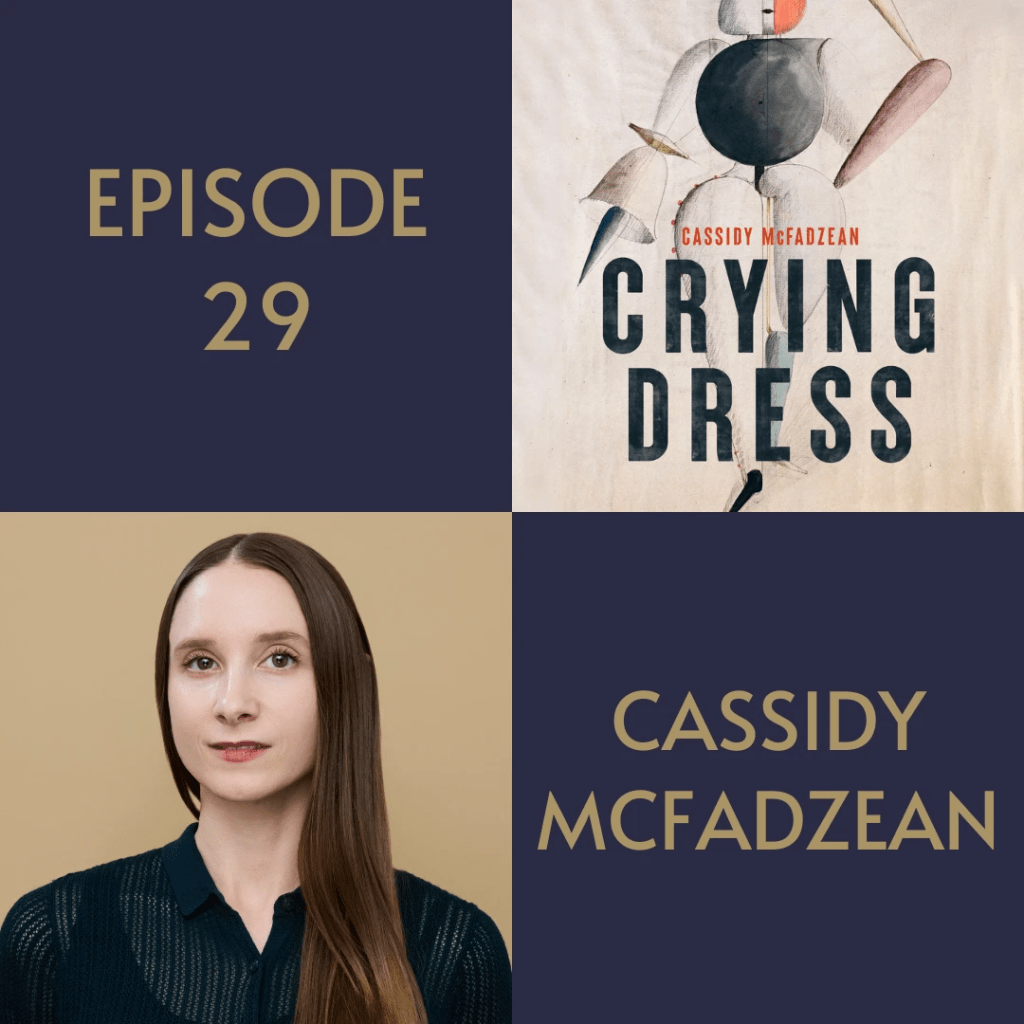
In this interview, we chat with Cassidy McFadzean about skewing prepositions, trusting the reader, opting for vibes over plot, and so much more.
Cassidy McFadzean is the author of three books of poetry, most recently Crying Dress (House of Anansi, 2024). Her fiction has appeared in Joyland, The Walrus, Hazlitt, and Dead Writers (Invisible Publishing, 2025). Cassidy was born in Regina, earned an MFA in poetry from the Iowa Writers’ Workshop, an MFA in fiction from Brooklyn College, and now lives in Toronto. She was the 2024-2025 Writer-in-Residence at Sheridan College, and is the 2025-2026 Poet-in-Residence at Arc Poetry Magazine.
Books mentioned in this episode:
The Weak Spot — Lucie Elven
Bird by Bird — Anne Lamott
Slows: Twice — T. Liem
Anne of Green Gables; Chronicles of Avonlea; Emily of New Moon; The Story Girl — Lucy Maud Montgomery
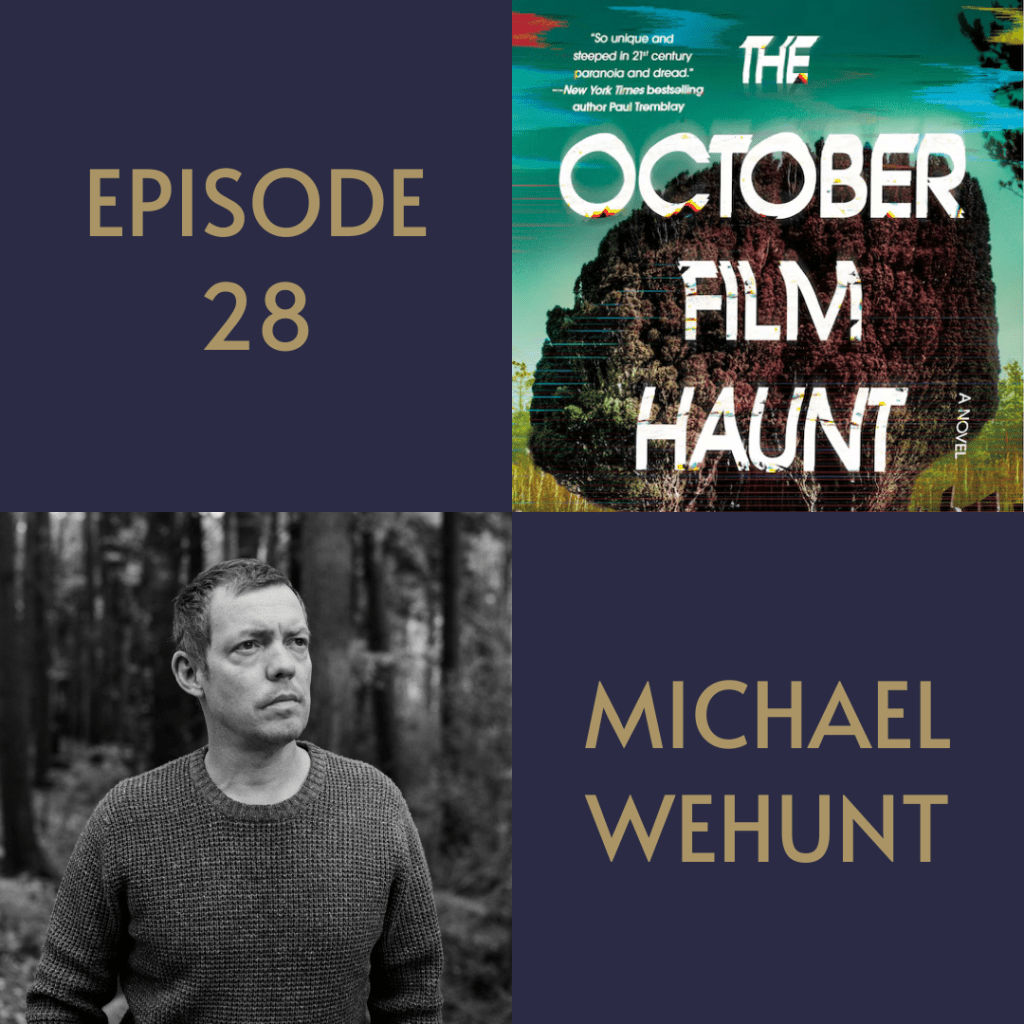
In this interview, we chat with Michael Wehunt about the administrative side of professional writing, the unanticipated weirdness of public selfhood, the “moment before the moment”, and so much more.
Michael Wehunt has been a finalist for the Bram Stoker Award, multiple Shirley Jackson Awards, and the International Association for the Fantastic in the Arts’ Crawford Award. In Spain, his translated works have garnered nominations for the Premio Ignotus and Premio Amaltea, winning the latter. He haunts the woods of Decatur, Georgia, with his partner and their dog. Together, they hold the horrors at bay. Most recently, he is the author of the novels The October Film Haunt and Nightjars.
Books and poems mentioned in this episode:
Ancient Images; The Grin of the Dark; Incarnate — Ramsey Campbell
Generation X: Tales for an Accelerated Culture — Douglas Coupland
Poems 1962-2020 — Louise Glück
Carrie — Stephen King
Beings — Ilana Masad
The God of the Woods; Long Bright River — Liz Moore
“Stand by Me finds its thematic core in the friendship between Gordie and Chris, who both perform masculine toughness to protect their mutually innate sensitivity.”
“I propose that horror literature, by definition, hinges on this vexed dialectic, between the affective destruction of thought and the creative process of thought (specifically, of cognizing the incognizable: the supernatural, the numinous, the unseen, the illegible). Within this dialectic, the horror writer oscillates between helpless prey to horror and the creative agent of horror.”
In this interview, we chat with Daniel Braum about exploring the ecology of the supernatural, finding inspiration in liminal spaces, cultivating a sense of awe, and so much more.
Daniel Braum writes short stories that explore the tension between the psychological and the supernatural. He intentionally adopts the term “strange tales” for his “Twilight Zone-like stories in homage to author Robert Aickman and the intentional ambiguities of his work. His latest collection is Phantom Constellations: Strange Tales and Ghost Stories from Cemetery Dance Publications (2025). His stories appear in places ranging from The Best Horror of the Year Volume 12, edited by Ellen Datlow, and Shivers 8, edited by Richard Chizmar.
Books and stories mentioned in this episode:
Cold Hand in Mine — Robert Aickman
The Artist’s Way — Julia Cameron
Ancient Images; The Hungry Moon — Ramsey Campbell
“Plunged in the Years” — Jeffrey Ford
“Children of the Corn” — Stephen King
The Ceremonies — T. E. D. Klein
Beginnings, Middles & Ends — Nancy Kress
Dreams of Dark and Light — Tanith Lee
Rosemary’s Baby; The Stepford Wives — Ira Levin
Story — Robert McKee
Conjunctions 83: The Ghost Issue — Joyce Carol Oates and Bradford Morrow, eds.
The Jaguar Hunter — Lucius Shepard
Shadowland — Peter Straub
Conjunctions 39: The New Wave Fabulists — Peter Straub, ed.
Harvest Home — Thomas Tryon
The Writer’s Journey: Mythic Structure for Writers — Chris Vogler
In this interview, we chat with Hajer Mirwali about cross-disciplinary work, embodied writing, poetic mad libs, and so much more.
Hajer Mirwali is a Palestinian and Iraqi writer living in Toronto. Her first book, Revolutions (Talonbooks, 2025), is a collection of poetry on shame, pleasure, and Arab Muslim girlhood. Two poems from the collection also appear in an anthology of Palestinian poetry called Heaven Looks Like Us (Haymarket Books, 2025). Hajer’s work has been published in The Ex-Puritan, Brick Magazine, Room Magazine, and Joyland. She has an MFA in Creative Writing from the University of Guelph, and a BA in Creative Writing from York University.
Merrily We Go to Hell (Dorothy Arzner, 1932) Duel in the Sun (King Vidor, 1946) Forever Amber (Otto Preminger, 1947) Secret Beyond the Door (Fritz Lang, 1947) Raw Deal (Anthony Mann, 1948) The Asphalt Jungle (John Huston, 1950) Don’t Bother to Knock (Roy Ward Baker, 1952) Magnificent Obsession (Douglas Sirk, 1954) Pushover (Richard Quine, 1954) Senso (Luchino Visconti, 1954) Cleopatra (Joseph L. Mankiewicz, 1963) Valley of the Dolls (Mark Robson, 1967) Looking for Mr. Goodbar (Richard Brooks, 1977) Looker (Michael Crichton, 1981) The Appointment (Lindsey C. Vickers, 1982) Mike’s Murder (James Bridges, 1984) Cold Heaven (Nicolas Roeg, 1991) Single White Female (Barbet Schroeder, 1992) Color of Night (Richard Rush, 1994) Torment (Claude Chabrol, 1994) Double Team (Tsui Hark, 1997) Unfaithful (Adrian Lyne, 2002) How Do You Know(James L. Brooks, 2010) The Eternal Daughter (Joanna Hogg, 2022) Cloud (Kiyoshi Kurosawa, 2024)
Northanger Abbey, by Jane Austen (1817) The Moonstone, by Wilkie Collins (1868) The Island of Dr. Moreau, by H. G. Wells (1896) What Maisie Knew, by Henry James (1897; 1908 New York Edition) The House of Souls, by Arthur Machen (1906) Widdershins, by Oliver Onions (1911) Summer, by Edith Wharton (1917) Tales of the Jazz Age, by F. Scott Fitzgerald (1922) The Maltese Falcon, by Dashiell Hammett (1930) Strangers on a Train, by Patricia Highsmith (1950) The Nothing Man, by Jim Thompson (1954) A Severed Head, by Iris Murdoch (1961) Aura, by Carlos Fuentes (1962) Slouching Towards Bethlehem, by Joan Didion (1968) Sula, by Toni Morrison (1973) The Coherence of Gothic Conventions, by Eve Kosofsky Sedgwick (1980) Bad Behavior, by Mary Gaitskill (1988) Ancient Images, by Ramsey Campbell (1989) Blonde, by Joyce Carol Oates (2000) Border Crossing, by Pat Barker (2001) These Truths: A History of the United States, by Jill Lepore (2018) The Best of Both Worlds, by S. P. Miskowski (2020) Hi, It’s Me, by Fawn Parker (2024) Dark Matter, by Kathe Koja (2025) Wreckage / What Happens in Hello Jack, by Peter Straub (2025)
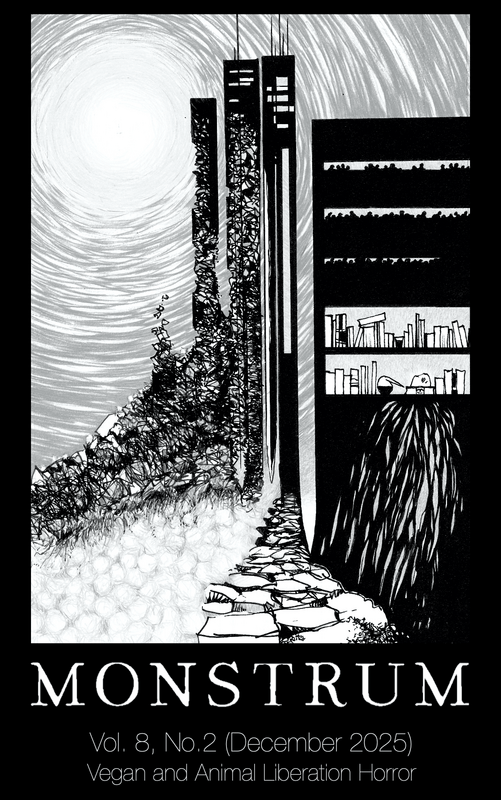
Guest-edited by horror scholar and fiction writer Mike Thorn, this robust issue presents six feature essays, two works of original fiction, a dossier of retrospective reviews, and two essays in our student forum. Feature essays cover both literature and the moving image from a broad range of perspectives. From reorienting human and more-than-human animal perspectives in the essays by Poulomi Choudhury, Dru Jeffries, and Britt MacKenzie-Dale, to epistemological and ontological shifts in the way we think of human and more than-human ecologies in the essays by Zoë Anne Laks, Jenni Makahnouk, and William Taylor, and the Introduction by Mike Thorn, the contributions to this special issue explore the challenge of thinking beyond harmful anthropocentric and hegemonic capitalist world systems.
For the first time, this issue of Monstrum includes original fiction. In “The Playground,” celebrated horror author Kathe Koja (The Cipher, Under the Poppy, Straydog) traces a shift in ecological sensibility to what might be called a necessary violence. And with “Cogno,” Mike Thorn (Darkest Hours, Peel Back and See) brings us into the terrifying world of tech-bro longevity at the expense of … maybe everything.
A selection of retrospective reviews considers literary and cinematic texts that strive to reorient human and nonhuman animal perspectives, including a critical reassessment of the (anti-)anthropocentrism in Nobel laureate Olga Tokarczuk’s novel Drive Your Plow Over the Bones of the Dead (2018), the vegan aesthetic of Rob Zombie’s films via House of 1000 Corpses (2003), and the brutal struggle against becoming-animal in Stuart Gordon’s grim King of the Ants (2003).
The student forum includes two essays by emerging scholars that continue the issue’s investigations of radical otherness. A product of the SSHRC-funded “Horror Ecologies” workshop by CORERISC held in summer 2024 at Dawson College, Emerson Reault’s essay reads Ginger Snaps as a trans allegory, reconsidering the film’s metaphorical “curse” as less one of becoming a woman, than that of an understanding of one’s embodiment. In their essay, Luka Romney looks at radical empathy for the “animal” Other via Julia Kristeva’s concept of herethics in two of Larry Cohen’s most provocative 1970s films, It’s Alive! (1976) and It Lives Again (1978).










 Mike Thorn